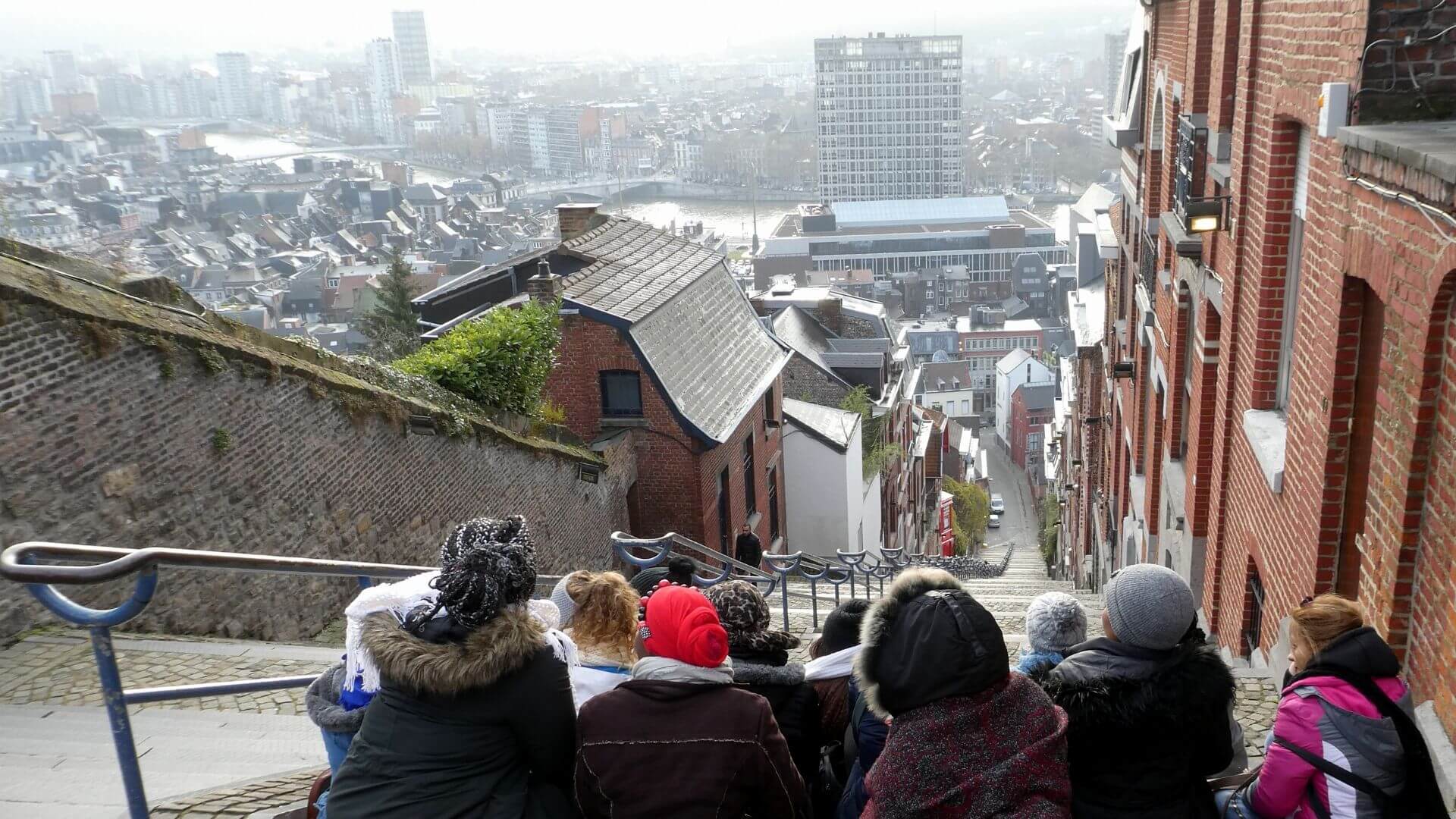
The city of Liège is much more than its restaurants, its International Jumping event or its magnificent Guillemin station. The people of Liège are known for their warm spirit, they do not hesitate to welcome refugees and migrants. Caritas joins the people of Liège and is strengthening its presence in the province.
Literacy courses, socio-legal permanencies and intercultural projects support refugees and migrants in their search for housing and accompaniment during the transition to autonomy. These programs are essential in order to live a dignified and independent life in Belgium!
People who are supported by Caritas have several things in common: first, they come from far away and had to leave everything behind in order to rebuild a life in Belgium. Second, their asylum procedure is ongoing or they have just been granted asylum. Third, their ability to integrate into Belgium is made even more difficult by certain factors that are considered “vulnerabilities”[1] such as being a minor, having a handicap, or being a single mother etc. To aid these people, Caritas offers them comprehensive and individual support on a human scale.
WHAT SUPPORT? Support towards autonomy
Socio-legal service, literacy and interculturality
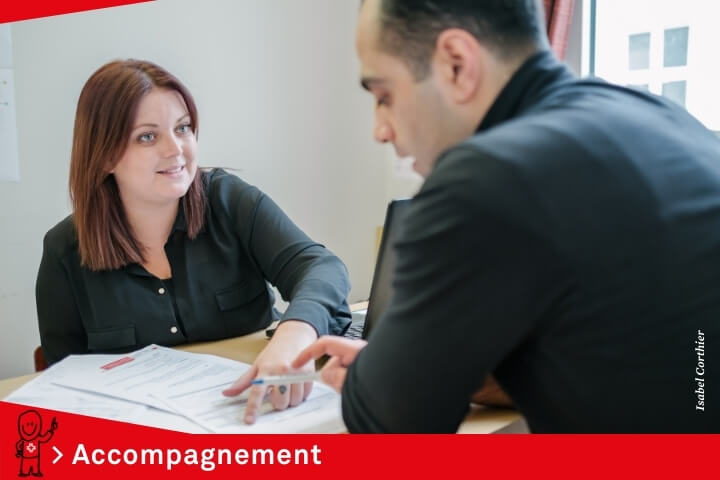
The recognition by the Walloon region of our services as a local integration initiative allows Caritas to reach a wider audience. The Liège team invites all migrants who have obtained refugee status to come and meet them and to take part in their socio-legal services, which include literacy courses and intercultural projects. In the socio-legal department, they can count on social, legal and administrative support. These services are available on Mondays from 1 p.m. to 4 p.m. and by appointment on Thursdays from 4 p.m. to 7 p.m. and Friday morning from 9 a.m. to 1 p.m. Information on the rights and duties of individuals as well as the rights of foreigners is given here. This service also serves as a relay point to other support organizations.
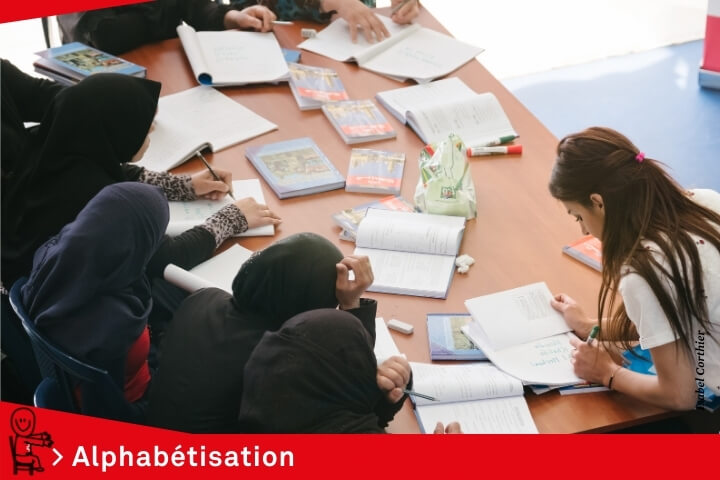
In the literacy classes, the French language program was revised over and over again to increase the autonomy of the participants. In small groups, 12 hours a week, they will quickly learn to communicate in everyday situations (taking the bus, introducing themselves, going to the doctor, etc.). In addition, during the school holidays, conversation tables are organized.
L’aspect interculturel reprend toutes les activités visant à rassembler la population liégeoise avec les personnes migrantes et réfugiées. Cela passe par des collaborations avec des clubs sportifs, des fêtes de voisinage et bien plus encore ! Iqbal, accompagné par Caritas, témoigne lors d’un tournois de football où jeunes réfugiés et belges composent les équipes sportives de Caritas : « Nous jouons tous ensemble et faisons connaissance avec des jeunes de différentes nationalités. De cette façon, nous pouvons aller au-delà des préjugés ». Pour être au courant de toutes les prochaines activités, rejoignez le groupe Facebook “Caritas International à Liège“.
Imagine if you were to find yourself in Belgium, alone as a minor. Of if you had significant vulnerabilities such as serious health problems. How does one deal with that? Fedasil redirects some of these people to Caritas in Liège.
“With Caritas, I have prepared my action plan for the future. One can advance step by step,” explains Jadallah (37 years old), a resident in Caritas’s transitional housing.
Concrètement, cela signifie un soutien à la mesure de la réalité individuelle des jeunes. Que ça soit dans notre service résidentiel pour mineurs non accompagnés (MENA) ou par un accompagnement psycho-social global et au logement. L’objectif reste le même : leur permettre de poursuivre leur épanouissement personnel et d’atteindre un niveau d’autonomie suffisant à leur majorité.
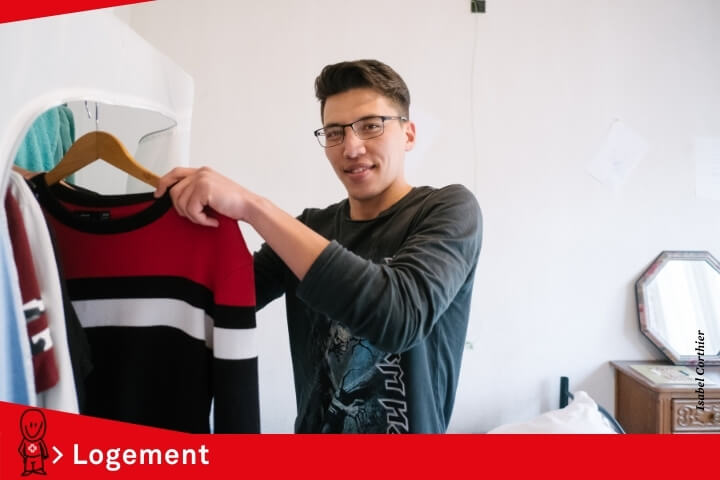
(Re-) learning to live independently is the path to dignity for vulnerable refugees. Caritas offers them transitional housing after they leave the reception facility for asylum seekers and before they settle in accommodation of their own. They are offered daily and comprehensive accompaniment (administrative and legal advise, educational and/or socio-professional integration and medical support).
Without a doubt: access to decent housing is an essential step towards integration. Therefore, Caritas works with migrants and refugees and homeowners in Liège to ensure that decent housing is available.
Whether the migrants/refugees arrived at Caritas via Fedasil or after a family reunification procedure, they receive support in finding accommodation. For Ramzy [2], a 17-year-old boy from Afghanistan who arrived alone in Belgium, this help was indispensable. “I had already called the owners but my French makes discussions difficult if not impossible. I was stuck. We couldn’t understand each other.” The team of Caritas employees and volunteers are present and provide the necessary encouragement during the various steps during the process (housing visits, administration, etc.). We facilitate contact with the owners and position ourselves as the mediator and offer social support in housing.
On the other side of the housing process, there are the “solidarity owners”. Caritas joined the “solidarity owner” [3] campaign initiated by the city of Liège in partnership with other local organizations. This initiative is the first large-scale public-private partnership that works with housing in Liège. “These last few years, the private market has become the only hope for many vulnerable tenants. Unfortunately, social housing cannot meet the high demand and is lacking,” explains Catherine Henrotte, coordinator of the Caritas team in Liège.
Caritas welcomes you to its local office, which is located in the bishopric’s premises. Its socio-legal services are available on Mondays from 1 p.m. to 4 p.m. and by appointment on Thursdays from 4 p.m. to 7 p.m. and on Friday morning from 9 a.m. to 1 p.m.
Here is the address: Rue du Moulin, 320A, 40200 Liège (Google Maps)
Our team of experienced social workers also organizes permanence in Brussels every day. They will be able to support you in areas of family reunification, voluntary return, finding accommodation or medical support. If you are in a precarious situation as an unaccompanied international student or a minor, you can also find help there. Do not hesitate to make an appointment by phone (+32) 02 229 36 11 between 8:30 a.m. and 3:30 p.m. You can also go to the permanence without an appointment on Monday, Tuesday, Wednesday and Friday from 8:30 a.m. to 11:30 a.m. and from 1:30 p.m. to 3:30 p.m.
NOTES :
[1] A person is considered vulnerable if they suffer, for example, from a physical, psychological or social handicap. We also support unaccompanied minors, pregnant women or those with a newborn baby, the elderly and large families. Our attention is also drawn to single parents, people who have resettled in Belgium and individuals suffering from social isolation and illiteracy.
Two powerful earthquakes struck Venezuela on 24 June. Images of collapsed buildings reveal the scale of the destruction, but they tell only part of the…
Caritas International does not provide any investment advice services and does not sell any cryptocurrencies. If you receive a suspicious message or have any doubts,…
Today, seven organisations publish the sixth edition of the report on the non-reception policy, covering the period from July to December 2025. Médecins Sans Frontières,…
Return and reintegration counselling is often discussed in policy terms, but in practice it is about people and difficult decisions. Through a series of trainings,…
Crises change, journeys evolve, people move forward. For decades, Caritas has walked alongside people on the move, in a world that never stops transforming. Today,…
In Gaza, civilians are trapped. Humanitarian convoys are blocked at the borders, while airdrops fail to reach the most vulnerable families. These actions cannot be…
Sometimes, undocumented migrants choose to return voluntarily to their country of origin. Caritas International wants to help them do so in the best possible conditions.
A significant proportion of the Nigerian population is chronically food insecure. The regions of Maradi and Zinder are among the most vulnerable, where there is…