Climate: Caritas marches for a fairer future

Caritas International Belgium Climate: Caritas marches for a fairer future

© Caritas International

© Caritas International

09/10/2026

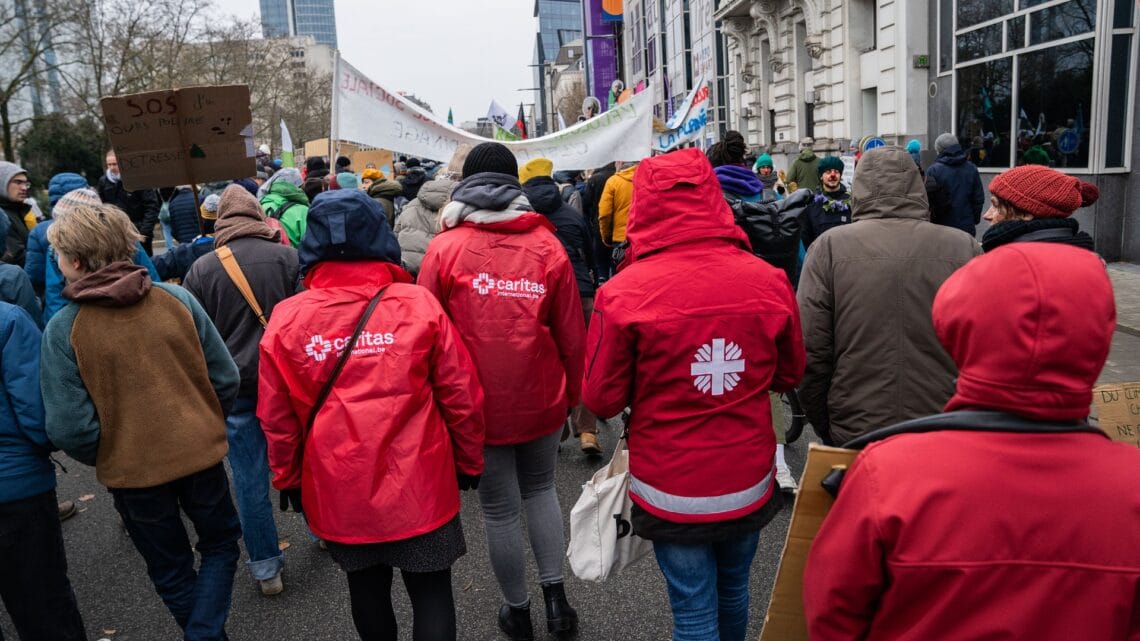
On Sunday 11 October 2026, Caritas International will join the Climate March in Brussels, organised by the Climate Coalition. Together with our partners and the communities we work with, we support solutions that enable people to live with dignity in a changing climate. Our participation reflects a shared conviction: a just transition must give everyone the means to shape their own future.

Climate action is also about human dignity

The climate directly affects access to water, harvests, health and housing conditions. Taking climate action also means protecting the conditions that allow everyone to live with dignity and build their future.

From Wolaita in Ethiopia to the High Fens in Belgium, circumstances differ, but they show how much our daily lives depend on the climate. In Belgium, the three heatwaves and drought of summer 2026 highlighted the importance of protecting health, water resources and nature. In Wolaita, farming families are adapting their practices to increasingly unpredictable rainfall to protect their harvests and incomes.

These challenges call for two complementary responses. Reducing greenhouse gas emissions helps limit global warming and its future consequences. Investing in adaptation helps communities cope with the changes they are already experiencing.

Caritas supports this adaptation alongside its partners and local communities. We also call for political decisions that address the causes of climate change. Our work on the ground and our participation in the Climate March share the same goal: enabling everyone to build a dignified and sustainable future.
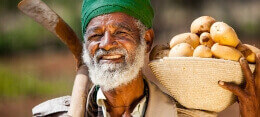

Adapting agriculture with communities affected by climate change

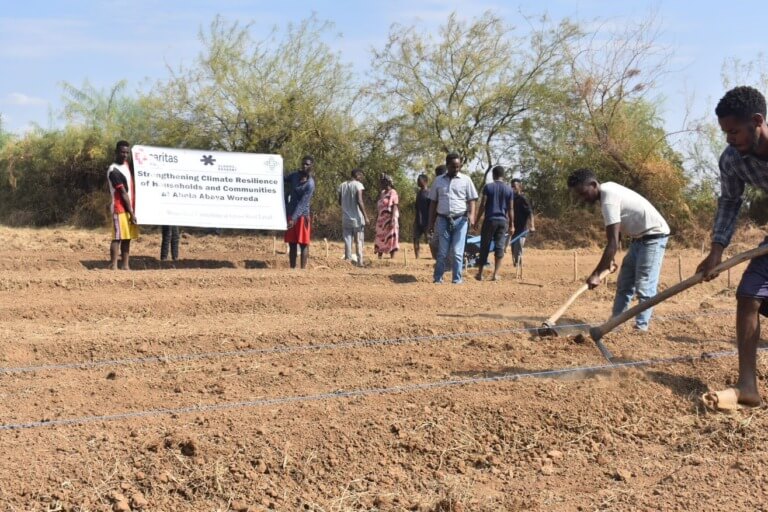
In Wolaita, many families depend on agriculture. Soil quality and access to water are essential to their harvests, food supply and incomes. As rainfall becomes less predictable, caring for the land helps families prepare for the seasons ahead.

Caritas International Belgium Climate: Caritas marches for a fairer future

© Ethiopian Catholic Church/Social and Development Commission/Soddo Branch

Caritas International works with its local Caritas partner and communities to strengthen their ability to adapt. Projects in the region combine land restoration, reforestation and farming practices suited to a changing climate, building on families’ own knowledge and experience.

These activities help strengthen families’ livelihoods. They give resilience a practical meaning: being able to adapt farming practices, continue working and take part in decisions that affect their future. Caritas also brings these experiences from the field into the climate debate.

Klimaatmaatregelen moeten voor iedereen haalbaar zijn

Access to savings, suitable housing, information and public services makes it easier to adapt to climate change. Climate justice means making these opportunities available to everyone, with particular attention to people who have fewer resources.

This is also what a just transition means: changing how we produce and consume while supporting people through those changes. For Caritas, responses to climate change must strengthen access to rights and support community initiatives. People’s experience and participation must help shape the decisions that affect their lives.

Supporting the freedom to choose one’s future

Climate adaptation also connects with our work alongside migrants and displaced people. Access to water, land and an income can influence decisions to stay or leave, alongside safety, family ties and job prospects.

People may move temporarily, seasonally or to another region within their own country. Each person’s journey needs to be understood in its own context. By supporting livelihoods and helping communities prepare for risks, we help preserve people’s ability to make their own choices. When people move, their rights and access to support that respects their dignity remain essential.

On 11 October, let’s advance climate justice together

This year, the Climate Coalition is calling for a concrete plan to phase out fossil fuels, with clear milestones and a just transition. Reducing our dependence on coal, oil and gas is essential to limit global warming and build a sustainable future.

Caritas joins this mobilisation with a clear conviction: climate policies must also give people the means to participate in the transition and adapt to a changing climate. This requires accessible resources, services that meet people’s needs and community participation in decisions that affect their future.

In Wolaita, this commitment takes shape through restored land and adapted farming practices. In Brussels, it continues through collective action to influence political decisions. On 11 October, let’s march together to connect these local initiatives with climate action that meets the scale of the challenges.

Join the movement. Let’s march together for the climate.

Linked news

All the news