Almost five years on, Ukrainian refugees are waiting to know what comes next

Caritas International Belgium Almost five years on, Ukrainian refugees are waiting to know what comes next

© Caritas International

© Caritas International

28/10/2026

Since Russia’s invasion of Ukraine, thousands of Ukrainians in Belgium have built a new life. They work, study, learn French or Dutch and build towards their future. Yet many still lack the stability they need to look ahead with confidence. After almost five years of temporary protection, they deserve clarity.

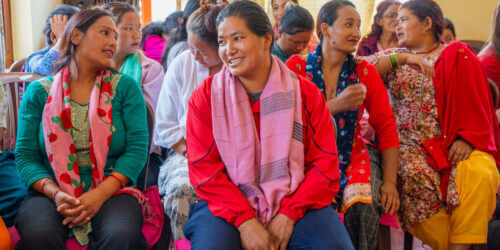
“We still keep a suitcase ready by the door,” Olga, Inna and Yevhennia joke to one another. It sounds light-hearted, but the memories of the bombs and the sudden departure are still there, along with the question of whether they might have to leave again soon.

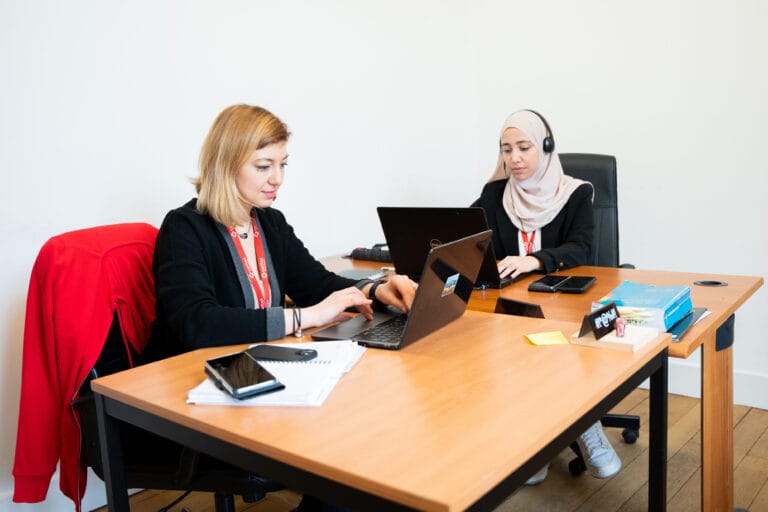
Yevhennia supports Ukrainian refugees at Caritas International. Shortly after their arrival, the conversations were mainly about practical matters such as housing, school and work. Now, they are increasingly about the longer term.

People want to move forward. But how do you do that when you don’t know where your future lies?

Yevhennia

Can my child continue to grow up here?

Inna fled Kharkiv, which was heavily bombed, with her three children in March 2022. Since then, they have gradually built a new life in Belgium. Inna works here, her two eldest sons live independently and have their own business. Her youngest goes to school, speaks fluent French and is feeling increasingly at home. He remembers very little of Kharkiv now.

Inna is proud of what her children have already achieved. She wants them to be able to continue growing here. Above all, the family needs stability to make that possible.

Can I buy a house?

Olga, who comes from a village near Kyiv, recognises that uncertainty.

I’m here now and I’m happy. I’d like to know where I stand. To buy a house. Renting is so expensive in Brussels. I’m in my thirties now. But I can’t really put down roots. I’m living from day to day.

Olga

Where does my future lie?

Andrii is 22 and comes from Chernihiv. Before the invasion, he was studying in Kyiv. When he fled to Belgium with his mother in 2022, he completed his bachelor’s degree online. He is now finishing his studies at a university in Brussels. His mother has returned to Ukraine. He is building his own life here, surrounded by a close circle of friends.

What I want to do later, and where I want to work, that’s for later. First, I need to pass my exams.

Andrii

How do you start again?

After being held captive in Russia, Nikita came to Belgium in 2023 for medical treatment. This allowed him to reunite with his family. His wife, Nadiia, had fled with their eldest child soon after the Russian invasion. Earlier this year, they had their second child in Belgium. Now, they are working towards a future as a family. Nikita is learning French and has retrained for a different career. He and Nadiia are doing their utmost to give their children a good start in life. Finding a steady job is one of their biggest concerns.

Our house has been destroyed, we have nothing left to return to.

Nikita

An emergency measure that has lasted almost five years

In March 2022, the European Union activated the Temporary Protection Directive for the first time. This gave people fleeing from Ukraine rapid access to residence rights, work, education, medical care and social support.

Since then, the arrangement has been extended several times. In July 2026, just a few months before the deadline, the EU decided to extend protection once again, until 4 March 2028.

This gives people more time, but it doesn’t change their current situation. Temporary protection was intended as an emergency measure, not as an arrangement under which people would have to live for years without knowing what comes next.

Since August 2026, new applications are also subject to additional rules concerning military obligations. These do not apply to people who already have protection and have maintained it continuously in the same EU country. This is another reminder of how quickly the conditions can change.

As early as 2025, the EU had called on Member States to prepare alternatives to temporary protection. Without a clear plan, people affected risk being left without any prospects at the last minute.


And what about Belgium?

Belgium has no specific transition arrangement. This means people have to rely on existing procedures, for example through work, study or family reunification. These options are not feasible for everyone. Procedures can take a long time and can affect people’s rights and the support they receive.

There is little clarity when it comes to asylum too. In practice, Belgium does not process the asylum applications of Ukrainians who have temporary protection. In October 2026, the Court of Justice of the European Union ruled that this cannot automatically be the case. The ruling concerned the Netherlands, but it is also relevant to Belgium.

People who have lived legally and continuously in Belgium for five years may, under certain conditions, apply for long-term resident status. However, people with temporary protection are excluded from this European scheme for as long as they hold that status. Those years of residence therefore do not automatically give them the right to permanent residence.

Staying or returning must be a choice

Inna, Olga, Andrii, Nadiia and Nikita demonstrate the strength it takes to rebuild a life. Their hopes for the future differ. Some want to stay in Belgium, while others hope to return to Ukraine as soon as it is safe to do so. Others are still unsure. After nearly five years, temporary protection is no longer enough to offer a clear path forward.

What solutions can help break the deadlock?

  • Clear and accessible pathways to long-term residence.
  • Individual assessment and legal certainty. Not everyone wants to stay, and not everyone can or wishes to return. This choice must be voluntary and based on personal circumstances, as well as a realistic assessment of safety in the country of origin.
  • Continuity of rights. Switching to another residence status must not leave people without an income, access to employment or the social protection they need.
  • A coordinated European approach. Common principles, clear information and coherent procedures should prevent people from having prospects in one country but very few in another.
Caritas International Belgium Almost five years on, Ukrainian refugees are waiting to know what comes next

(c) Caritas International

Ukraine Info Desk: a trusted point of contact for years

Since March 2022, the legal experts and social workers at Caritas International have been answering questions from Ukrainians forced to flee their country and arriving in Belgium. Some people who arrived in 2022 are still reaching out today. At the same time, the team continues to address new questions and challenges. The need for clear information and personalised support has therefore not disappeared, it has evolved alongside the situation.

Questions or need help? The Ukraine Information Point can be contacted free of charge on 0800 2 41 41 or via WhatsApp on +32 476 34 07 58. The team answers questions in French, English, Ukrainian and Russian.

Linked news

All the news